Pricepoint raises $6.6M seed round to build the future of hotel revenue management →

Partnerships
Build, refer or grow with Pricepoint. Pick the program that fits how you work with hotels.
Become a partner →Partnerships
Build, refer or grow with Pricepoint. Pick the program that fits how you work with hotels.
Become a partner →October 7, 2026
Recent regulatory developments in California and a class action in Quebec highlight growing scrutiny of algorithmic pricing practices. This article explains the difference between price-following systems and independent pricing intelligence — and why regulation is accelerating that shift.
Over the past year, regulators and courts in North America have begun to look more closely at how pricing algorithms actually work — not just at the prices they produce.
Two developments stand out:
Although these cases emerge from different legal frameworks, they point in the same direction:
pricing systems must demonstrate independence, transparency, and accountability.
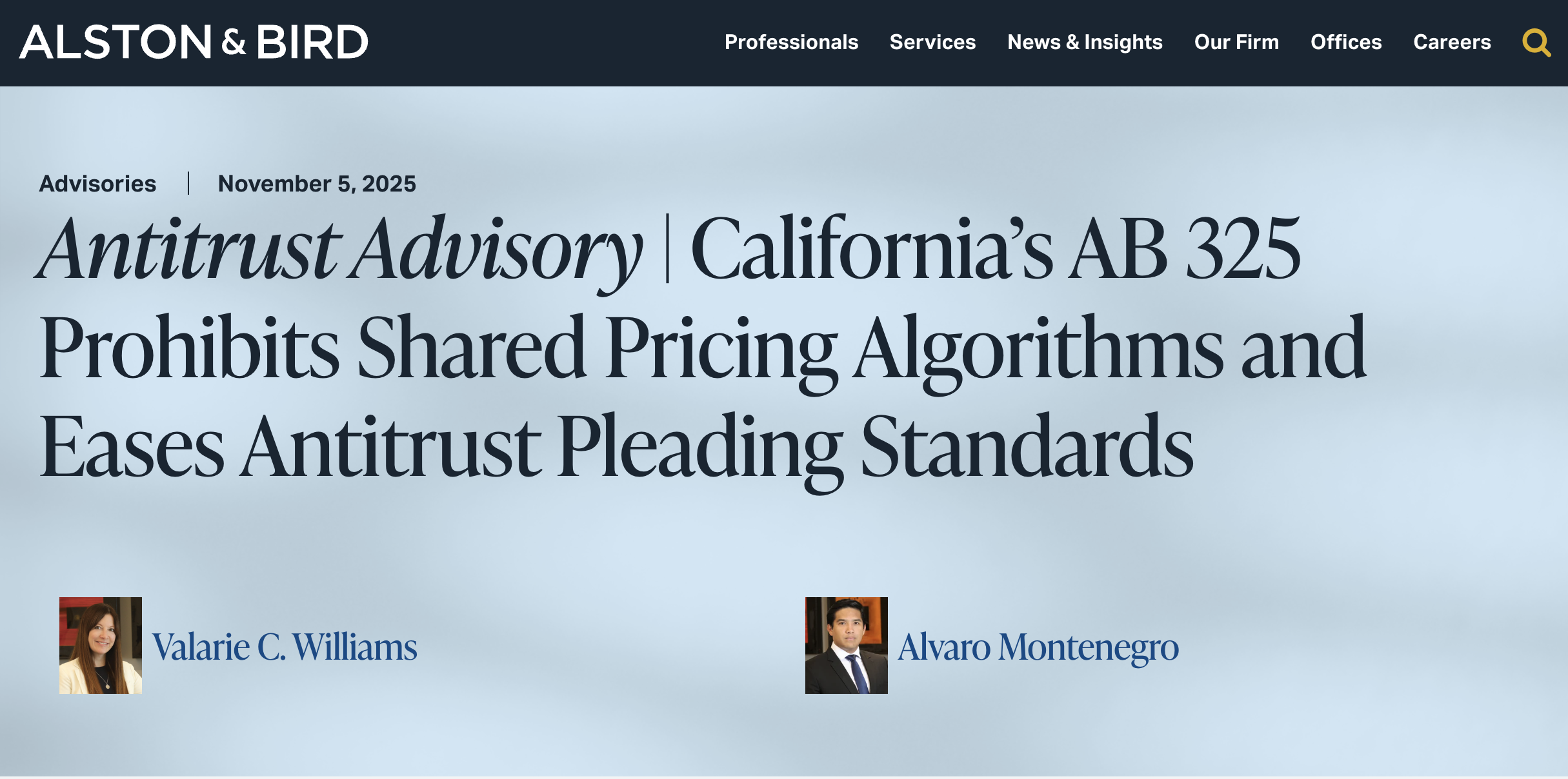
In October 2025, California enacted Assembly Bill 325 (AB 325) and Senate Bill 763 (SB 763), amending the Cartwright Act, the state’s main antitrust statute.
These amendments explicitly address the use of pricing algorithms shared across multiple businesses, particularly when those algorithms:
Legal analyses make clear that the law is not limited to explicit collusion.
It also captures situations where algorithmic systems effectively coordinate pricing behavior, even indirectly.
Official legal analysis:
The law came into force on January 1, 2026, significantly lowering the threshold for antitrust scrutiny of pricing software and increasing potential penalties.
In Quebec, scrutiny is coming from a different angle — consumer protection rather than antitrust — but the implications for pricing systems are just as relevant.
The Superior Court of Québec has authorized a class action titled:
Chafik Mihoubi v. Priceline.com, L.L.C. et al.
The case alleges that certain hotel booking platforms displayed prices in a way that was misleading to consumers, particularly by excluding mandatory fees and taxes from the initially advertised price, in potential violation of the Quebec Consumer Protection Act.
While this case does not directly target RMS algorithms, it reinforces a broader regulatory theme:
Pricing mechanisms, displays, and logic must be defensible, transparent, and fair to end customers.

Taken together, California and Quebec illustrate a shared regulatory direction:
This matters deeply for revenue management software (RMS).
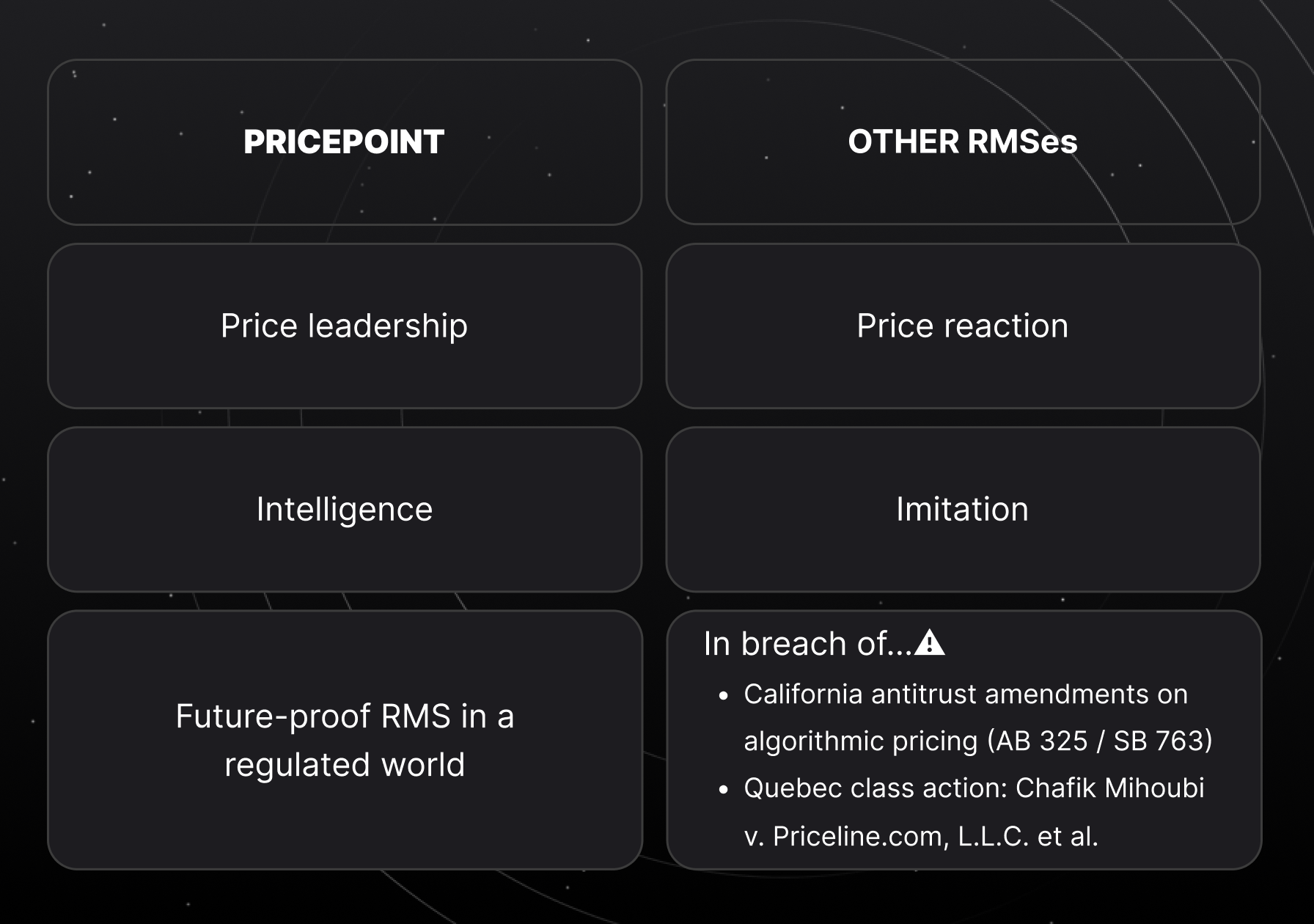
Many traditional pricing systems were built on competitive benchmarking:
This approach is increasingly fragile in a regulated environment.
By contrast, pricing intelligence focuses on:
The pricing decision is derived internally, not inferred from competitors.
Pricepoint was built around independent AI-driven pricing strategies, not competitor-led logic.
Key principles:
This structure aligns naturally with the intent behind both:
Pricepoint customers act as price leaders, not price followers.
Rather than slowing innovation, these regulatory developments clarify what modern pricing systems should look like.
They reward platforms that:
In that sense, regulation is not changing the future of pricing — it is confirming it.
As scrutiny increases across jurisdictions, hotels and revenue leaders will increasingly ask:
Pricing intelligence — not price imitation — is becoming the standard answer.