Pricepoint raises $6.6M seed round to build the future of hotel revenue management →

Partnerships
Build, refer or grow with Pricepoint. Pick the program that fits how you work with hotels.
Become a partner →Partnerships
Build, refer or grow with Pricepoint. Pick the program that fits how you work with hotels.
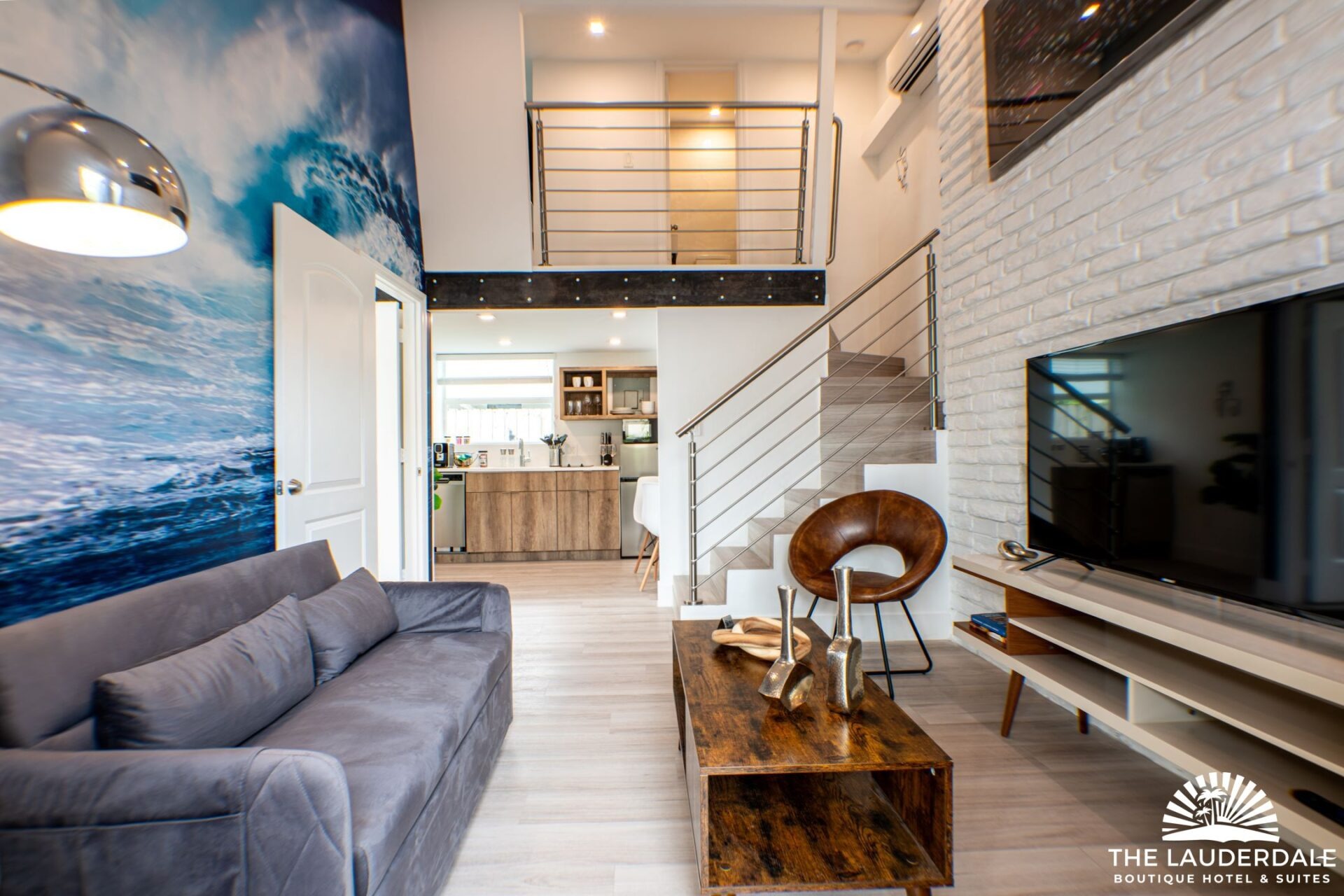
Become a partner →The Lauderdale Boutique Hotel & Suites is a 17-room hotel in Fort Lauderdale with no front desk, a part-time manager and guests who mostly book within a week of arrival. Its owners had a pricing tool that was free to use. They pay for Pricepoint instead, and general partner Noel Poler credits it with a 12% RevPAR lift while occupancy held at 80%.
17 rooms: run with no front desk and a part-time property manager
+12%: RevPAR lift attributed to Pricepoint
80%: occupancy, held steady after the switch to Pricepoint
$12 to $20: added to the property's value for every extra dollar of yearly profit, at a 5% to 8% cap rate
Company: The Lauderdale Boutique Hotel & Suites — an independent boutique hotel in Fort Lauderdale, Florida
Rooms: 17, from queen and king studios to two-bedroom suites with full kitchens
Challenge: Pricing late-booking demand from a hospital, a convention center and a cruise port, with no revenue manager on staff
Solution: Pricepoint automated pricing, working within rules set by the owner
PMS: Guesty
On Pricepoint since: February 2025
Every month, Noel Poler pays for Pricepoint. A pricing tool that's free to use sits unused beside it.
“It's not only that I'm willing to pay Pricepoint's price, it's that I'm willing to do it when my alternative in this case is free for me.” — Noel Poler, General Partner, The Lauderdale Boutique Hotel & Suites
To understand that choice, start with what Noel set out to build.
Noel spent years in the hotel industry, including as Regional Sales Director at InterContinental Hotels. He came away convinced that the returns are in owning the asset, not running it.
In June 2023, he and a group of investors bought The Lauderdale, then a 13-unit mid-century property near downtown Fort Lauderdale. A $600,000 renovation added four rooms, smart locks, fiber Wi-Fi, new kitchens and baths, and wall-sized ocean murals. The hotel reopened fully in early 2024 with 17 rooms.
The previous owner had lived on site much of the time and done everything himself. Noel's pitch to investors was the opposite: enough technology to run the hotel with a part-time manager, and returns to match. It never mentioned AI. In 2023, Noel says, AI wasn't on most people's radar.
Three major sources of demand sit within ten minutes of the hotel:
These guests book late. About 60% of reservations arrive within seven days of the stay, and 77% of stays are one or two nights. Every night's rate has to be right, and it has to be right fast.
When Noel took over, pricing wasn't set up for that. About 90% of bookings came through one or two booking sites, and rates were set by watching the hotels nearby.
“You're constantly looking at what the nearest two or three competitors are charging... And you figure, hey, with today's technology, there's got to be a better way.” — Noel Poler, General Partner
Noel's first step was an automated pricing tool he could already use at no extra cost. It was designed mainly for short-term rentals, where each unit is its own business. It updated rates about once a day and priced every room on its own.
A hotel doesn't work that way. The Lauderdale's 17 rooms share one building and one pool of demand, so the right price for any room depends on how full the whole hotel is. A tool that prices rooms one at a time can't see the hotel filling up, which is exactly when rates should rise.
In February 2025, The Lauderdale started a two-month Pricepoint trial. It has been a customer since.
Pricepoint watches the whole property: rooms left for each night, how fast bookings are arriving and what competitors and the local events calendar are doing. It adjusts rates throughout the day as those signals shift, then sends them to Guesty, the platform Noel runs the hotel from. Guesty pushes the rates directly to Airbnb, Booking.com and Expedia, and through SiteMinder to the smaller channels.
“The fact that Pricepoint updates, I don't know, 60 times a day, or however many times a day... that is also a major part of the value proposition.” — Noel Poler, General Partner
Noel sets the strategy. Pricepoint executes it. He defines the rules, such as minimum stays and event-date pricing, and can approve or override any suggestion from his phone.
Noel measures Pricepoint's contribution at a 12% lift in RevPAR. Occupancy held at about 80% across 2024 and 2025, so the gain came from pricing each night better rather than from selling more rooms.
Source: The Lauderdale's 2024 and 2025 operating actuals.
Noel judges every tool by what it adds to the value of the asset, and this is where better pricing pays off for an owner.
Hotels are valued on their net operating income. Small hotels typically trade at cap rates of 5% to 8%, which means every extra dollar of yearly profit adds roughly $12 to $20 to the property's value. For example, $10,000 more in profit a year would add about $125,000 to $200,000 when the hotel is valued or sold.
“I think that Pricepoint is one of those. That extra dollar to the ADR or to the RevPAR... immediately adds significantly more value than what it costs to the asset.” — Noel Poler, General Partner
The same thinking applies to his time. Pricing, guest messaging, check-in and cleaning schedules now run without Noel's day-to-day involvement.
“We only have a part-time property manager, and I might go weeks literally without talking to him.” — Noel Poler, General Partner
Listen to Noel discuss AI-driven hotel operations on the Pricepoint Podcast.